
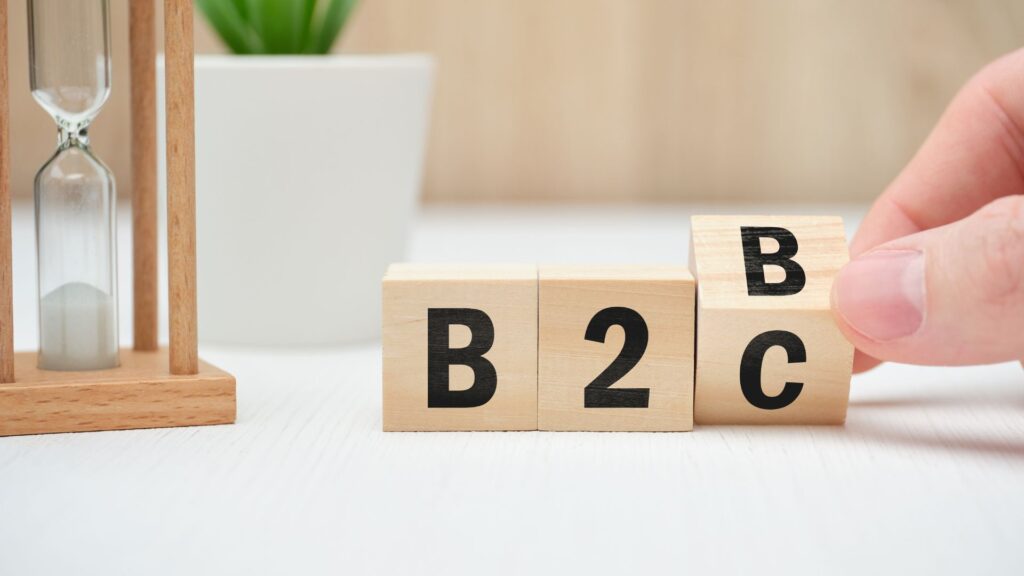
One of the most fundamental distinctions in marketing is understanding whether you’re selling to businesses (B2B) or consumers (B2C). While both involve connecting with people, the strategies, messaging, and approaches that drive success are dramatically different. Getting this wrong can waste thousands of dollars and months of effort.
After 10+ years of developing marketing strategies for both B2B and B2C clients, we’ve learned that the companies achieving the best results are those that tailor their approach to match their audience’s mindset, decision-making process, and purchasing behavior.
What’s the Real Difference Between B2B and B2C?
B2B (Business-to-Business) marketing involves selling products or services to other businesses, organizations, or institutions. You’re targeting decision-makers who are purchasing on behalf of their company.
B2C (Business-to-Consumer) marketing focuses on selling directly to individual consumers who are making personal purchasing decisions with their own money.
But the distinction goes much deeper than just “who” you’re selling to – it fundamentally changes “how” you need to sell.
The Psychology Behind Each Market
B2B Buyers Are Risk-Averse Problem Solvers
When business professionals make purchasing decisions, they’re not just spending money – they’re putting their reputation and job security on the line. A bad decision can impact their team, their budget, and their career trajectory.
B2B buyers approach purchases with questions like:
- “How will this solve our business problem?”
- “What’s the ROI and how can I prove it?”
- “Will this decision make me look good to my boss?”
- “What happens if this doesn’t work?”
B2C Buyers Are Emotion-Driven Value Seekers
Consumer purchases are often driven by personal desires, immediate needs, or emotional triggers. While they care about value, they’re more likely to make impulsive decisions and are influenced by lifestyle aspirations.
B2C buyers typically think:
- “Do I want this?”
- “Will this make me happy/solve my problem?”
- “Can I afford it right now?”
- “What will others think about this purchase?”
Key Differences in Marketing Approach
Decision-Making Process
B2B: Committee-Based, Longer Sales Cycles
- Multiple stakeholders involved (users, influencers, decision-makers, gatekeepers)
- Extensive research and comparison phases
- Sales cycles often range from weeks to years
- Formal procurement processes and budget approvals
B2C: Individual or Household Decisions
- Usually 1-2 people making the decision
- Shorter consideration periods (minutes to weeks)
- More impulsive purchasing behavior
- Direct payment without complex approval processes
Content and Messaging Strategy
B2B Content Should Be Educational and Authority-Building
- Detailed whitepapers, case studies, and technical specifications
- Industry-specific language and expertise demonstration
- ROI calculators and comparison charts
- Thought leadership content addressing industry challenges
Example B2B Headline: “How Enterprise Software Companies Reduce Customer Churn by 34% with Strategic Partner Marketing Programs”
B2C Content Should Be Engaging and Benefit-Focused
- Emotional storytelling and lifestyle imagery
- Simple, benefit-driven language
- Social proof through reviews and user-generated content
- Entertainment value mixed with product information
Example B2C Headline: “Transform Your Morning Routine: The 5-Minute Skincare System That’s Taking Social Media by Storm”
Channel Strategy Differences
B2B: Professional and Relationship-Focused Channels
- LinkedIn dominates social media strategy
- Email marketing with segmented, nurture sequences
- Industry publications and trade shows
- Partner and referral programs
- Account-based marketing approaches
B2C: Broad Reach and Engagement-Focused Channels
- Instagram, TikTok, Facebook for social media
- Influencer partnerships and celebrity endorsements
- Google Ads and shopping campaigns
- Retail partnerships and point-of-sale marketing
- SMS and push notifications for immediate engagement
Pricing and Value Communication
B2B: Total Cost of Ownership and Long-Term Value
B2B buyers think in terms of:
- Return on investment (ROI)
- Total cost of ownership over multiple years
- Efficiency gains and resource optimization
- Risk mitigation and competitive advantages
Your pricing presentation should include detailed breakdowns, comparison charts, and long-term value calculations.
B2C: Immediate Value and Emotional Payoff
Consumer buyers focus on:
- Sticker price and payment options
- Immediate benefits and gratification
- Comparison to competitor prices
- Perceived value relative to lifestyle improvement
Your pricing should emphasize affordability, payment plans, and immediate benefits.
Partnership Marketing Strategies for Each Segment
B2B Partnership Approach
Strategic Alliance Focus: Partner with complementary service providers, consultants, and industry experts who have established relationships with your target accounts.
Educational Co-Marketing: Joint webinars, whitepapers, and industry reports that provide value while showcasing both partners’ expertise.
Referral Programs: Structured programs with clear criteria, documentation requirements, and professional onboarding processes.
B2C Partnership Approach
Influencer Collaborations: Authentic partnerships with creators whose audiences align with your target demographics.
Lifestyle Integration: Product placement and endorsements that feel natural within entertainment or educational content.
Social Commerce: Partnerships that leverage social media shopping features and viral sharing mechanisms.
Common Mistakes We See Companies Make
Treating B2B Like B2C
The Mistake: Using emotional appeals and flashy creative without substance. The Fix: Lead with logic, data, and clear business value propositions.
Treating B2C Like B2B
The Mistake: Over-complicating messaging with technical jargon and lengthy explanations. The Fix: Focus on benefits, emotions, and clear calls to action.
One-Size-Fits-All Partnership Programs
The Mistake: Using identical commission structures and requirements for both markets. The Fix: Develop separate partnership strategies tailored to each audience’s needs.
Measuring Success: Different Metrics Matter
B2B Key Performance Indicators
- Customer Acquisition Cost (CAC) and Customer Lifetime Value (CLV)
- Sales cycle length and conversion rates by stage
- Account-based metrics (pipeline value, deal size)
- Partner-driven revenue and relationship quality
B2C Key Performance Indicators
- Conversion rates and average order value
- Social engagement and brand awareness metrics
- Customer retention and repeat purchase rates
- Viral coefficient and organic reach
Building Your Dual-Market Strategy
If your business serves both B2B and B2C markets, you need separate strategies for each:
Segment Your Messaging: Create distinct value propositions and content libraries for each audience.
Choose Different Channels: Allocate budget to the platforms where each audience actually spends time.
Develop Specialized Partnerships: Build separate affiliate and influencer programs designed for business buyers versus consumers.
Track Performance Separately: Use different metrics and success criteria for each market segment.
The Future of B2B and B2C Marketing
The lines between B2B and B2C are blurring as business buyers become more consumer-like in their expectations for seamless, digital-first experiences. However, the fundamental psychological drivers remain distinct.
Successful companies are adopting “B2B2C” approaches – reaching business decision-makers through consumer-style channels while maintaining professional messaging and relationship-building focus.
Which Strategy Does Your Business Need?
Understanding whether you’re primarily B2B, B2C, or serving both markets is crucial for developing effective marketing strategies and partnership programs. The companies that get this right consistently outperform those using generic, one-size-fits-all approaches.
At Tactical Partner Marketing, we specialize in developing customized strategies for both B2B and B2C markets. Whether you need to build professional partnerships that drive enterprise sales or consumer-focused influencer campaigns that create viral growth, we have the expertise to match your approach to your audience.
Ready to optimize your marketing strategy for your specific audience? Schedule a consultation and discover how tailoring your approach to B2B or B2C psychology can dramatically improve your results.
About Tactical Partner Marketing: We’re a full-service partner marketing consultancy with expertise in both B2B and B2C markets. Our team has successfully developed affiliate programs, influencer partnerships, and celebrity endorsements across industries, helping businesses achieve measurable growth through strategic partnerships tailored to their specific audience.